
Justice

Justice

#1 in shows
2009ShowDocumentary

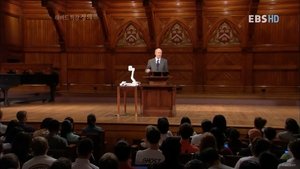
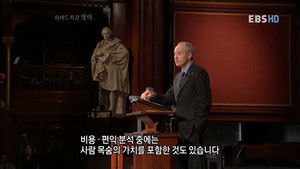
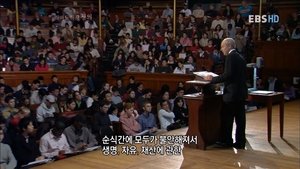
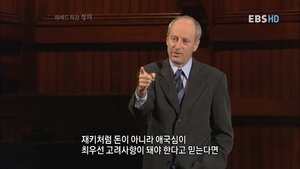
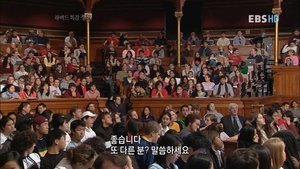
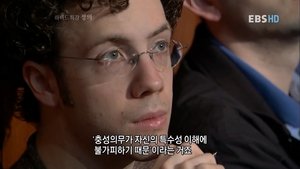
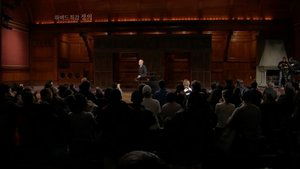
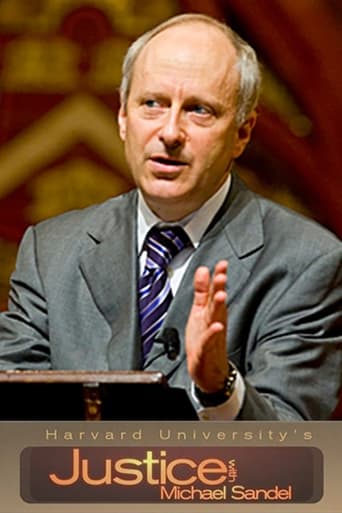
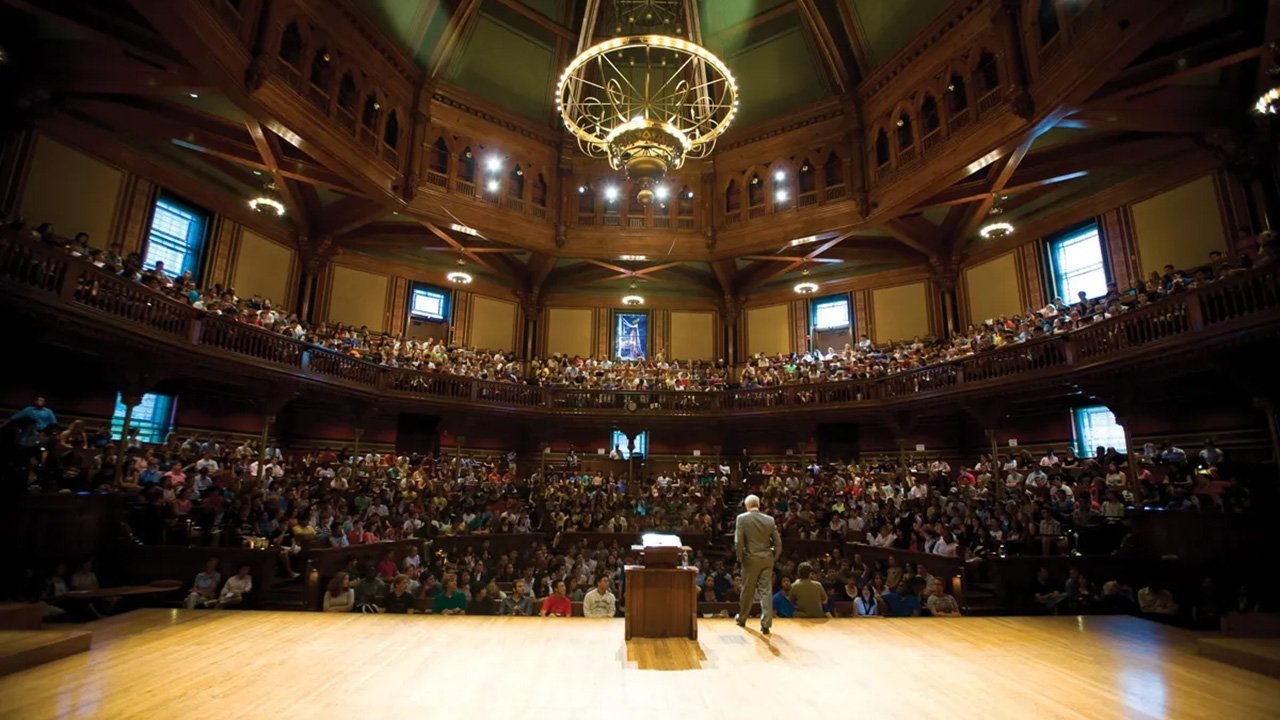
Justice is the first Harvard course to be made freely available online and on public television. In this 12-part series, college professor Michael Sandel challenges us with hard moral…

Documentary

Episodes

Pick a season and jump in

  1. 1The Moral Side of Murder/The Case for Cannibalism13 Sep 2009 · 30 minIf you had to choose between killing one person to save the lives of five others and doing nothing, even though you knew that five people would die right before your eyes if you did nothing—what would you do? What would be the right thing to do?
  2. 2Putting a Price Tag on Life/How to Measure Pleasure20 Sep 2009 · 30 minSandel presents some contemporary cases in which cost-benefit analysis was used to put a dollar value on human life. The cases give rise to several objections to the utilitarian logic of seeking “the greatest good for the greatest number.” Is it possible to sum up and compare all values using a common measure like money?
  3. 3Free to Choose/Who Owns Me?27 Sep 2009 · 30 minSandel introduces the libertarian notion that redistributive taxation—taxing the rich to give to the poor—is akin to forced labor. If you live in a society that has a system of progressive taxation, aren’t you obligated to pay your taxes? Don’t many rich people often acquire their wealth through sheer luck or family fortune?
  4. 4The Land is My Land/Consenting Adults4 Oct 2009 · 30 minThe philosopher John Locke believes that individuals have certain rights—to life, liberty, and property—which were given to us as human beings in the “the state of nature,” a time before government and laws were created. According to Locke, our natural rights are governed by the law of nature, known by reason, which says that we can neither give them up nor take them away from anyone else.
  5. 5Hired Guns?/For Sale: Motherhood11 Oct 2009 · 30 minDuring the Civil War, men drafted into war had the option of hiring substitutes to fight in their place. Many students say they find that policy unjust, arguing that it is unfair to allow the affluent to avoid serving and risking their lives by paying less privileged citizens to fight in their place. Is today’s voluntary army open to the same objection? Professor Sandel examines the principle of free-market exchange as it relates to reproductive rights. Students debate the nature of informed consent, the morality of selling a human life, and the meaning of maternal rights.
  6. 6Mind Your Motive/The Supreme Principle of Morality18 Oct 2009 · 30 minProfessor Sandel introduces Immanuel Kant, a challenging but influential philosopher. Kant rejects the notion that morality is about calculating consequences. When we act out of duty—doing something simply because it is right—only then do our actions have moral worth.
  7. 7A Lesson In Lying/A Deal Is A Deal25 Oct 2009 · 30 minImmanuel Kant believed that telling a lie, even a white lie, is a violation of one’s own dignity. Sandel introduces the modern philosopher, John Rawls, who argues that a fair set of principles would be those principles we would all agree to if we had to choose rules for our society and no one had any unfair bargaining power.
  8. 8What's A Fair Start?/What Do We Deserve?1 Nov 2009 · 30 minRawls argues that even meritocracy—a distributive system that rewards effort—doesn’t go far enough in leveling the playing field because those who are naturally gifted will always get ahead. Furthermore, says Rawls, the naturally gifted can’t claim much credit because their success often depends on factors as arbitrary as birth order. Sandel discusses the fairness of pay differentials in modern society.
  9. 9Arguing Affirmative Action/What's The Purpose?8 Nov 2009 · 30 minStudents discuss the pros and cons of affirmative action. Should we try to correct for inequality in educational backgrounds by taking race into consideration? Should we compensate for historical injustices such as slavery and segregation? Is the argument in favor of promoting diversity a valid one? How does it size up against the argument that a student’s efforts and achievements should carry more weight than factors that are out of his or her control and therefore arbitrary? When a university’s stated mission is to increase diversity, is it a violation of rights to deny a white person admission? Sandel introduces Aristotle and his theory of justice. He believes that justice is about giving people their due, what they deserve.
  10. 10The Good Citizen/ Freedom Vs. Fit15 Nov 2009 · 30 minAristotle believes the purpose of politics is to promote and cultivate the virtue of its citizens. The telos or goal of the state and political community is the “good life”. And those citizens who contribute most to the purpose of the community are the ones who should be most rewarded. But how do we know the purpose of a community or a practice? How does Aristotle address the issue of individual rights and the freedom to choose? If our place in society is determined by where we best fit, doesn’t that eliminate personal choice? What if I am best suited to do one kind of work, but I want to do another?
  11. 11The Claims Of Community/Where Our Loyaty Lies22 Nov 2009 · 30 minCommunitarians argue that, in addition to voluntary and universal duties, we also have obligations of membership, solidarity, and loyalty. These obligations are not necessarily based on consent. We inherit our past, and our identities, from our family, city, or country. But what happens if our obligations to our family or community come into conflict with our universal obligations to humanity? Do we owe more to our fellow citizens that to citizens of other countries? Is patriotism a virtue, or a prejudice for one’s own kind? If our identities are defined by the particular communities we inhabit, what becomes of universal human rights?
  12. 12Debating Same-Sex Marriage/The Good Life29 Nov 2009 · 30 minIf principles of justice depend on the moral or intrinsic worth of the ends that rights serve, how should we deal with the fact that people hold different ideas and conceptions of what is good? Can we settle the matter without discussing the moral permissibility of homosexuality or the purpose of marriage? Sandel believes government can’t be neutral on difficult moral questions, such as same-sex marriage and abortion, and asks why we shouldn’t deliberate all issues—including economic and civic concerns—with that same moral and spiritual aspiration.

Cast

Michael Sandel

Michael Sandel

Self

Watch Justice online (2009 series)

Justice began in 2009 and has 1 season with 12 episodes, and sits in Documentary. It aired on PBS. The main cast includes Michael Sandel. It carries a 10.0 out of 10 rating on TMDB from 1 votes.

Every season has its own page with the full episode list, so you can jump straight to the episode you want instead of scrolling one long page. Playback is free and needs no account; the stream comes from a third-party embed provider.

What Justice is about

Justice is the first Harvard course to be made freely available online and on public television. In this 12-part series, college professor Michael Sandel challenges us with hard moral dilemmas and invites us to ponder the right thing to do—in politics and in our everyday lives.

Justice seasons and episodes

The series has 1 season and 12 episodes in total. Pick a season to see its episode titles, air dates and synopses:

Season 1 opens with The Moral Side of Murder/The Case for Cannibalism, followed by Putting a Price Tag on Life/How to Measure Pleasure.

Justice cast and characters

Michael Sandel Self

Series like Justice

These are the shows most often watched after Justice:

Justice FAQ

How many seasons of Justice are there?

1 season, with 12 episodes in total. Season 1 is listed first on this page; every season has its own page with the full episode list.

Where can I watch Justice online?

On this page. Press Play to open the full-screen player at season 1, episode 1. The player's season and episode selectors let you move through the show without leaving full-screen.

When did Justice first air?

The first episode aired on 13 September 2009. The most recent episode aired on 29 November 2009. The series is currently marked as “Ended”.

What genre is Justice?

Justice is listed as Documentary. You can browse more in Documentary.

Is Justice free to watch?

Browsing and playback on MoviesHD are free and need no account. MoviesHD does not host the episodes; the stream comes from a third-party provider, so availability can differ by region.

Keep browsing MoviesHD

All shows · Movies · Anime · FAQ · Disclaimer

MoviesHD does not host, upload, or store any files. Titles shown here are indexed automatically from public sources and third-party services. The media stays on those platforms — we only provide links. This product uses the TMDB API but is not endorsed or certified by TMDB.

© 2026 MoviesHD · v1.1.0