The Great Philosophers

The Great Philosophers

#1 in shows
1987ShowTalk

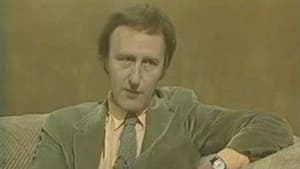
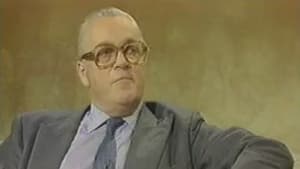
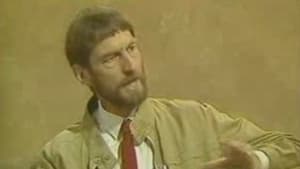
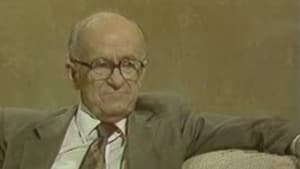
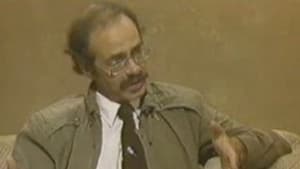
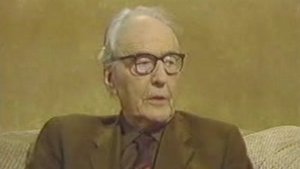
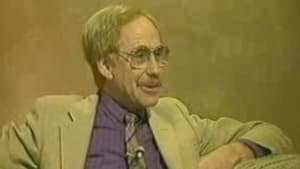
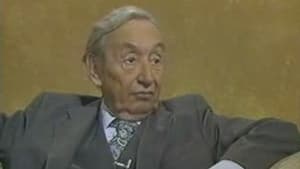
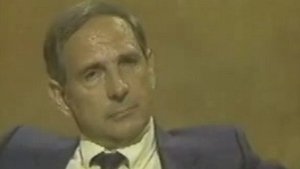
Bryan Magee traces the history of western philosophy over two millennia, discussing the ideas of the past with an expert guest or contemporary philosopher.

Talk

Episodes

Pick a season and jump in
  1. 1Plato6 Sep 1987 · 43 minThe dialogues of Plato are analyzed in this program by Cambridge philosophy professor Miles Burnyeat. Seeing Plato's ideas initially as extensions of those of his teacher, Socrates, Burnyeat explains the development and content of Plato's original; doctrines of knowledge as virtue, the immortality and tripartite division of the soul, and the theory of forms (ideas). Plato's political philosophy is discussed within the context of the notion of the ideal state—a political utopia ruled by philosopher kings.
  2. 2Aristotle13 Sep 1987 · 43 minIn this program, the far-reaching philosophical ideas of Plato's star pupil are examined by noted Brown University professor Martha Nussbaum. Aristotle overcomes Plato's dualism of the intelligible and sensible worlds with his principle of inseparable nature of eternal matter and form. The principles of potentiality and actuality are examined, along with Aristotle's theory of the four causes—material, formal, efficient, and final—which account for changes in all things. These theories of constancy and change are credited with the progress of scientific inquiry over the ages.
  3. 3Medieval Philosophy20 Sep 1987 · 43 minThis program examines the ideas of the medieval philosophic theologians, particularly St. Thomas Aquinas. Oxford medieval philosopher Anthony Kenny discusses Aristotelian logic as the basis of Aquinas' thought, and disputes charges that medieval philosophy merely reinforced extant Christian views. Logical methods employed by Aquinas are discussed as precursors of the scientific methodology of later philosophers, such as Descartes.
  4. 4Descartes4 Oct 1987 · 43 minI think, therefore I am. Rationalist philosopher and mathematician René Decartes, considered the father of modern philosophy, held this as self-evidently true. In this program, Bernard Williams of Kings College examines Decartes' theory of knowledge and his use of skeptical inquiry to affirm reality, including the existence of God. Descartes' theory of physical and mental substances, and Cartesian dualism—which allows the concept of science to coexist with the notion of God—are examined.
  5. 5Spinoza and Leibniz11 Oct 1987 · 43 minThe ideas of rationalist philosophers Baruch Spinoza and Gottfried Leibniz are examined in this program by philosophy Anthony Quinton. Spinoza favors a pantheistic God who has matter and mind as two attributes, and who is the ultimate substance and explanation of the world. Leibniz sees the real world as consisting of an infinity of things purely spiritual, where everything, including space, is a phenomenon—a by-product of areal world with an infinite array of spiritual centers. Both philosophers construct a world that is very different form what the average person perceives, and both reject Cartesian duality.
  6. 6Locke and Berkeley18 Oct 1987 · 43 minThis program examines the philosophies of British empiricists John Locke and George Berkeley. Philosopher Michael Ayers of Oxford interprets Locke's skeptical theory that all knowledge is sensory and speculative, and that the true nature of the world can never be known as an attack on Descartes' theory of innate ideas. Conversely, Berkeley insists that we cannot have sensory knowledge of material substances because the exist only in the mind. Even the laws of nature, Berkeley says are merely the regularities of our own perceptions or ideas.
  7. 7Hume25 Oct 1987 · 41 minThe leading philosopher of the Scottish Enlightenment, David Hume, is the subject of this program. In it, expert John Passmore of the National Australian University discusses causality as the cornerstone of Hume's philosophy. Also discussed are three of Hume's basic philosophical views:anything that is not a fact, is illusion; judgments on fact mist be based on concrete experience; and all knowledge is imperfect. Hume also denies the idea of a continuous identical self, refutes deism, and views reason as a slave to passion.
  8. 8Kant1 Nov 1987 · 42 minContemporary philosopher Geoffrey Warnock discusses the philosophy of anti-empiricist Immanuel Kant, and his view that activities and powers within the mind are the key to knowledge, and that all knowledge is appearance. Knowledge for Kant, is a complex affair, in which knowing is acquired not just through the senses, but through pure concepts of understanding indigenous to the mind. Countering Hume, Kant insists it is the mind, not the senses, which unifies and organizes sensory flow into meaning full definitions of things.
  9. 9Hegel and Marx8 Nov 1987 · 43 minIn this program, contemporary philosopher Peter Singer discusses rational Hegelian philosophy, and the historicism and organicism at its root. Hegel's theories of absolute idealism and of a dialectic, emphasize history in their development of a model of reality. His concept of this reality as ultimately spiritual, and of philosophy as organic and constantly changing, is examined. The theories of Karl Marx are discussed as essentially Hegelian, but a practical economic spin
  10. 10Schopenhauer22 Nov 1987 · 42 minThis program examines the systematic, philosophical pessimism of Arthur Schopenhauer and its emphasis on infraconsciousness, or will, as the irrational motivating force in human nature. Distinguished philosophical historian Frederick Copleston discusses Schopenhauer's theory of underlying reality as experienced through the inner self. On a larger scale, the concept of will is ultimately defined as energy, which is judged to be central to scientific explanations of what drives the universe.
  11. 11Nietzsche29 Nov 1987 · 43 minVehement repudiation of Christian and liberal ethics; the detestation of democratic ideals; the celebration of the "superman"; the death of God; and a life-affirming "will to power" are the philosophical legacies of Friedrich Nietzsche. In this program, Nietzsche philosopher J.P. Stern discusses these concepts as the genesis of existentialism, and as the root philosophies of fascist political movements.
  12. 12Husserl, Heidegger and Modern Existentialism6 Dec 1987 · 45 minIn contrast to empiricist and rationalist traditions, existentialism proposes and orderless world, vaguely hostile, where people choose their character goals, have an obligation only to "authentic," and may only observe the truth (reality) in moments of anxiety. In this program, University of California, Berkeley philosopher Herbert Dreyfus traces the roots of existentialism from Edmund Husserl's School of Phenomenology, to his pupil Martin Heidegger's theories of das Sein, the threefold structure of activity, authenticity, and nihilism. Dreyfus relates the philosophies of both en to present-day schools of thought.
  13. 13The American pragmatists13 Dec 1987 · 42 minC.S. Peirce, William James, John Dewey In this program, Columbia University professor Sidney Morgenbesser discusses the nuances of pragmatic philosophy as expressed by three of America's greatest thinkers. Moranbesser examines Peirce's theory of meaning and the notion of fallibilism that supports the changing nature of truth. James' concept of meaning, knowledge, and truth is examined within the context of the usefulness of particular conceptual schemes. The discussion of Dewey focuses on the human quest for warranted beliefs, and his philosophy of education—a "bottom up" approach that bases instruction on a child's real problems and experiences.
  14. 14Frege, Russell and Modern Logic20 Dec 1987 · 42 minBryan Magee talks to A.J. Ayer about Gottlob Frege and Bertrand Russell; specifically about their published works and their impact Bryan Magee talks to A.J. Ayer about Gottlob Frege and Bertrand Russell; specifically about their published works and their impact on philosophy itself.
  15. 15Wittgenstein27 Dec 1987 · 44 minBryan Magee talks to John Searle about the legacy of Ludwig Wittgenstein; ranging from his early work, the Tractatus, to his posthumously published, Philosophical Investigations.

Cast

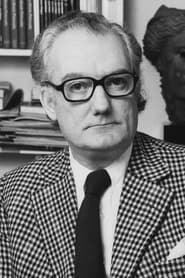
Bryan Magee

Bryan Magee

Host

Watch The Great Philosophers online (1987 series)

The Great Philosophers began in 1987 and has 1 season with 15 episodes, and sits in Talk. It aired on BBC One. The main cast includes Bryan Magee. It carries a 6.5 out of 10 rating on TMDB from 2 votes.

Every season has its own page with the full episode list, so you can jump straight to the episode you want instead of scrolling one long page. Playback is free and needs no account; the stream comes from a third-party embed provider.

What The Great Philosophers is about

Bryan Magee traces the history of western philosophy over two millennia, discussing the ideas of the past with an expert guest or contemporary philosopher.

The Great Philosophers seasons and episodes

The series has 1 season and 15 episodes in total. Pick a season to see its episode titles, air dates and synopses:

Season 1 opens with Plato, followed by Aristotle.

The Great Philosophers cast and characters

Bryan Magee Host

Series like The Great Philosophers

These are the shows most often watched after The Great Philosophers:

The Great Philosophers FAQ

How many seasons of The Great Philosophers are there?

1 season, with 15 episodes in total. Season 1 is listed first on this page; every season has its own page with the full episode list.

Where can I watch The Great Philosophers online?

On this page. Press Play to open the full-screen player at season 1, episode 1. The player's season and episode selectors let you move through the show without leaving full-screen.

When did The Great Philosophers first air?

The first episode aired on 6 September 1987. The most recent episode aired on 27 December 1987. The series is currently marked as “Ended”.

What genre is The Great Philosophers?

The Great Philosophers is listed as Talk. You can browse more in Talk.

Is The Great Philosophers free to watch?

Browsing and playback on MoviesHD are free and need no account. MoviesHD does not host the episodes; the stream comes from a third-party provider, so availability can differ by region.

Keep browsing MoviesHD

All shows · Movies · Anime · FAQ · Disclaimer

MoviesHD does not host, upload, or store any files. Titles shown here are indexed automatically from public sources and third-party services. The media stays on those platforms — we only provide links. This product uses the TMDB API but is not endorsed or certified by TMDB.

© 2026 MoviesHD · v1.1.0